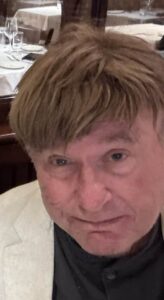
Hal Lippman, former Falls Church vice mayor and School Board member who now heads up the Little City’s venerable citizens association, the Citizens for a Better City (CBC), came before the F.C. City Council at its meeting this Monday to deliver a powerful message about how the City’s legacy commitment to truly affordable housing has been “lost” despite all the recent discussions about the issue.
The reason, Lippman stated, is that “one of the main reasons for this is our efforts have persistently failed to focus on providing affordable units targeted on households with lower annual incomes, such as those with 40 – 60 percent of Area Median Income (AMI) – that’s between $65,600 and $98,400 (the AMI for a four-person household in the DC Metro Area is just under $164,000).”
“My point is,” he added, that “to this very day as the Council is once again deliberating on affordable housing I believe we have never focused adequately on the essential issue of bringing about a more racially and economically diverse community. Our wonderful Little City remains the least racially diverse community in the region and an economic gated community for lower income people of color and others in similar circumstances.”
He began his remarks saying, “I’m here tonight after attending the Council work session last week and having been struck by the absence in the hours-long discussion of any mention of some key concepts and ideas about the fundamental purpose of affordable housing in Falls Church.”
In other words, as Lippman put it, all the heat and light being focused on so-called “affordable housing” is not achieving the goals the City has adopted at all, which is to provide truly affordable housing for the predominantly racially minority populations that need it the most.
Here is the full text of the remarks presented by Lippman this Monday:
“Good evening again esteemed council members, I’m still Hal Lippman, President of CBC but this time I’ll be talking about the affordable housing effort being considered tonight. In doing so, I want to be clear that my remarks are being made in my personal capacity not my role as CBC’s president. I will add, however, that affordable housing remains a matter of active interest among CBC executive committee members and it is very likely you will be hearing more from us about this issue as you continue your work on it.
“Shifting gears, I’m here tonight after attending the Council work session last week and having been struck by the absence in the hours-long discussion of any mention of some key concepts and ideas about the fundamental purpose of affordable housing in Falls Church. I offer these remarks harking back to the landmark 2021 joint League of Women Voters/CBC forums on the past, present, and future of affordable housing in our City. It’s worth noting, that Mayor Hardi and planning commissioner Alan Brangman participated as panelists in one of the forums.
“The overarching theme in the forums was that Falls Church had been trying to do something about the issue of affordable housing for more than 40 years with little success. However, concerted efforts by the Council in 2020 did bring about a significant increase in the number of affordable housing units, with the added benefit of their being “permanently affordable,” rather than time-limited. These small-scale efforts have continued and additional units have been added, but
“Let me add that one of the main reasons for this is our efforts have persistently failed to focus on providing affordable units targeted on households with lower annual incomes, such as those with 40 – 60% of Area Median Income (AMI) – that’s between $65,600 and $98,400 (the AMI for a four-person household in the DC Metro Area is just under $164,000).
“To sum up, my point is, to this very day as the Council is once again deliberating on affordable housing I believe we have never focused adequately on the essential issue of bringing about a more racially and economically diverse community. Our wonderful Little City remains the least racially diverse community in the region and an economic gated community for lower income people of color and others in similar circumstances.
“Thanks so much for hearing me out…I look forward to your continued efforts to make meaningful progress in an area of public policy that’s proven to be so intractable for so long.”