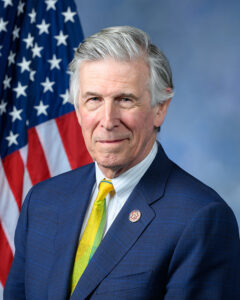
WASHINGTON — U.S. Sen. Mark R. Warner (D-VA) has joined nine Senate colleagues to introduce the Small Business RELIEF Act, legislation aimed at shielding small businesses from the burden of global baseline and reciprocal tariffs, and refunding those that have already paid.
The move comes after the U.S. Court of Appeals for the Federal Circuit ruled on Aug. 29 that former President Donald Trump’s so-called “Liberation Day” tariffs were illegal. The Supreme Court agreed this week to take up the case in November, but the tariffs remain in place pending that decision.
“Trump’s tariffs have hit small businesses particularly hard as they struggle to absorb the increased costs,” Warner said. “The Small Business RELIEF Act will help make sure that Trump’s reckless taxes don’t cripple small businesses in Virginia and across the country.”
Alongside Warner, the measure was introduced by Sens. Chuck Schumer (D-NY), Edward J. Markey (D-MA), Richard Blumenthal (D-CT), Mazie Hirono (D-HI), Angela Alsobrooks (D-MD), John Hickenlooper (D-CO), Mark Kelly (D-AZ), Kirsten Gillibrand (D-NY), and Martin Heinrich (D-NM).
National small business leaders voiced support, pointing to the tariffs’ outsized impact on entrepreneurs already operating on razor-thin margins.
“Small businesses were the ones hit hardest by the Trump-era tariffs — paying higher prices on everything from raw materials to the tools they need to keep their doors open,” said Richard Trent of Main Street Alliance. “Refunding small businesses would put money back into local economies, help create jobs, and level the playing field after years of unfair trade policy.”
Todd McCracken, president of the National Small Business Association, added that emergency tariffs “without exemptions for small companies threaten their survival, undermine local economies, and weaken supply chains upon which countless communities are built.”
Other advocacy groups, including Small Business Majority, Women Impacting Public Policy, and California’s CAMEO Network, echoed those concerns — noting higher costs have already forced many small firms to cut jobs, delay expansions, and raise prices. They argue refunds and exemptions would provide immediate, badly needed relief.
“Main Street is bearing the brunt of policies that failed to consider the real-world consequences for small businesses,” said Shaundell Newsome, co-chair of Small Business for America’s Future. “Without action, we’ll continue to see economic consequences that devastate not just individual businesses but entire communities.”