
by Belen Quellet
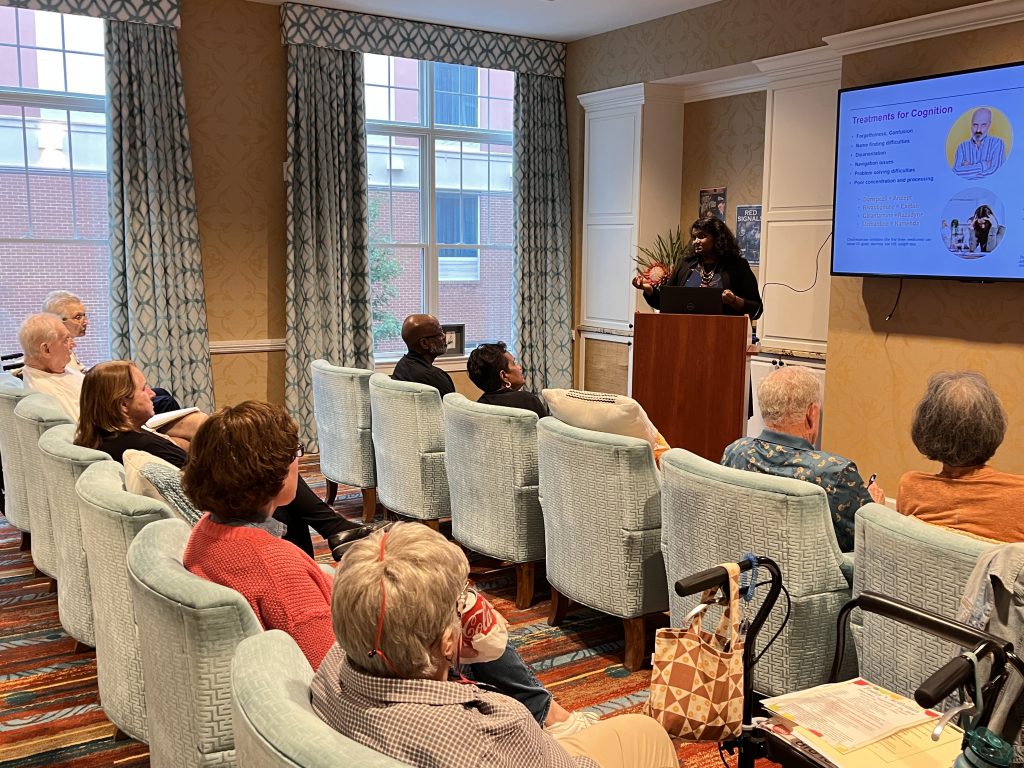
New advances in the treatment of Alzheimer’s were shared by Dr. Jennifer Pauldurai at a talk at the Kensington Senior Living in Falls Church last week.
In the words of one of her patients, “Dr. Pauldurai is a warm, caring physician who explains everything well and answers questions carefully.” After attending her presentation on the latest breakthroughs in Alzheimer’s treatment at The Kensington Falls Church, it’s easy to see why this sentiment is so widely shared. The Kensington, which hosts monthly educational events free and open to the public, welcomed Dr. Pauldurai for the first time to discuss new medications and behavioral therapies for Alzheimer’s. Her approachable and empathetic style made the complex subject matter accessible, bringing much-needed clarity and hope to those affected by the disease.
Dr. Jennifer Pauldurai is a board-certified adult neurologist specializing in Cognitive and Behavioral Neurology. Her training in whole-person integrative care allows her to provide comprehensive treatment for people experiencing cognitive and functional changes. Currently practicing at the Inova Parkinson’s and Movement Disorders Center, Dr. Pauldurai focuses on lessening the burden of brain disease through empathetic, shared decision-making that addresses not just physical but also emotional, cognitive, and social health.
“Dementia doesn’t look the same for everyone,” Dr. Pauldurai explained. While Alzheimer’s disease is the most recognized form of dementia, it is not necessarily the most severe. Symptoms of Alzheimer’s can range from forgetfulness to mood swings, changes in sleep patterns, and shifts in appetite. Despite the vast amount of research being done in this area, there is currently no cure. However, there are symptom-based therapies aimed at improving the quality of life and reducing distressing symptoms.
Alzheimer’s disease is characterized by the buildup of amyloid plaques in the brain, which disrupt cell function and lead to cognitive decline. Dr. Pauldurai highlighted the progress being made in targeting these plaques with FDA-approved immunotherapy drugs. These treatments, administered through intravenous (IV) infusions, are designed to reduce beta-amyloid plaques, helping to slow down cognitive and functional decline, particularly in the early stages of the disease. She was careful to note, however, that amyloid is just one of many targets being studied in the ongoing fight against Alzheimer’s.
Living with cognitive impairment is extremely stressful, both for the individual and their loved ones. Dr. Pauldurai described how the brain of a person with Alzheimer’s enters a sort of “survival mode.” It’s constantly on the defense, fighting the plaques as if they were a threat, unaware of the symptoms the disease is causing. “It’s the loss of who I am as a person,” she explained, urging caregivers and loved ones to consider the emotional and psychological toll of Alzheimer’s on the patient.
This “survival mode” often leads to resistance when others attempt to provide care. Dr. Pauldurai advised approaching patients with empathy and patience, as their behavior is shaped by their brain’s ongoing struggle. Rather than forcing them into situations that provoke anxiety, it’s important to work alongside them in a way that minimizes resistance and encourages cooperation. Patients often become more self-conscious as they begin to notice their memory lapses, which can lead to increased anxiety and a tendency to avoid social situations.
In a particularly poignant moment, Dr. Pauldurai compared the needs of Alzheimer’s patients to those of a child. Just as a baby feels safe when its mother is calm and happy, an Alzheimer’s patient who has lost their sense of safety and security will respond to the emotional environment around them. By treating them with patience and compassion, and by being mindful of their basic needs—such as sleep, food, and emotional security—we can help ease their anxiety.
Dr. Pauldurai emphasized that caregivers should focus on adjusting the environment to meet the needs of the patient rather than attempting to change the person themselves. It starts with normalizing the situation and meeting the individual where they are, rather than trying to impose expectations on them.
Dr. Pauldurai’s final message was simple but powerful: “The best thing you can do is protect your brain health.” She likened the current era to the 1960s, when public awareness of heart health surged, leading to widespread changes in lifestyle and medical care. Brain health is becoming a top priority for people of all ages, helping to reduce the risk of cognitive decline and protect future generations from diseases like Alzheimer’s.
Her advice? Be kind to your brain. Engage in activities that stimulate cognitive function, maintain a healthy lifestyle, and stay connected with your community. The breakthroughs in Alzheimer’s treatment are promising, but prevention and early intervention remain the best strategies for long-term brain health.