


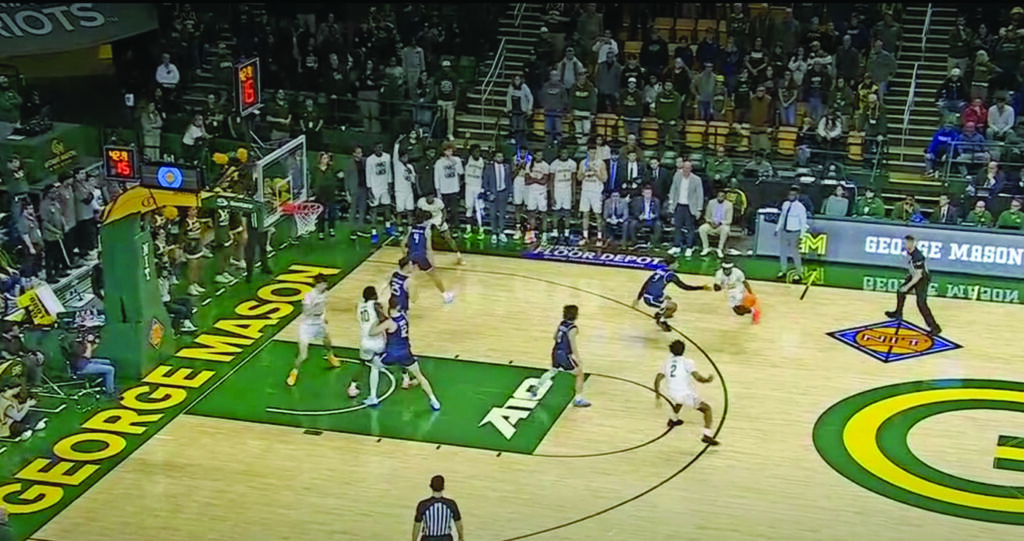
FAIRFAX, Va. If Tuesday night’s 77-71 loss to Liberty in the first round of the NIT was not a microcosm of Mason’s season, it was close. After a disappointing time in Pittsburgh, the Patriots returned home for a Tuesday night matchup with Liberty, hoping to extend their season one more game.
Despite a career performance from Jahari Long and a furious second-half rally, George Mason’s season came to a close with the 77-71 defeat. The Patriots finish 23-10, tied for the fifth-most wins in program history, but the final chapter leaves a mix of pride, frustration, and unanswered questions.
In many ways, this game and this season captured the good, the bad, and the ugly of modern college basketball.
The Good
Start with the fight.
Down 15 late in the first half, Mason could have folded. Instead, they clawed back possession by possession until the game was tied at 65-65 and later 67-67 with just over a minute to play. EagleBank Arena had life, and for a moment, it felt like something special was brewing.
Jahari Long delivered the kind of performance players dream about in March. The graduate student poured in a career-high 27 points, including 20 in the second half, willing Mason back into the game with toughness and shot-making. Kory Mincy added 16 points and nine rebounds, continuing his steady leadership, while freshman Emmanuel Kanga flashed his future with a 12-point, 10-rebound double-double.
This was not a team lacking heart. Far from it.
Head coach Tony Skinn said it plainly: “I thought our guys fought hard in the second half.”
And they did. That resilience is the foundation Skinn has been building since taking over, and it is real.
The Bad
Postseason basketball is unforgiving.
“You can’t get down 15 points,” Skinn admitted. That was the difference.
Mason’s slow start, trailing 32-17 late in the first half, forced them to spend the rest of the night chasing. Even after tying the game, the Patriots could not get over the hump. Liberty, a disciplined and experienced program, made the final plays when it mattered most.
There is also the broader reality of the season. Injuries piled up in the middle of the year, disrupting rhythm and consistency. Skinn never used that as an excuse, but it remains part of the story. In today’s game, that is often the difference between a good team and a great one.
The Ugly
Then there is the part no one likes to talk about, but everyone knows defines today’s college sports landscape.
Roster uncertainty.
As Mason turns the page to next season, the questions begin almost immediately. Who stays? Who goes? Who gets recruited away? Who enters the portal?
Skinn has made it clear he has big aspirations for the program. Mason is no longer climbing out of the cellar. The Patriots now look like a legitimate top-four team in the Atlantic 10.
The next step is the hardest one, staying there.
How does Mason consistently compete with programs like Dayton, Saint Louis, and VCU? How do they build continuity in an era where success often leads to roster turnover? How does Skinn manage the reality that both his name and his players’ names will surface in offseason rumors?
That is the modern game. It is not always pretty.
Looking Ahead
There is still reason for optimism.
This was Mason’s second straight NIT appearance, the first time the program has reached back-to-back postseasons since 2007-09. The standard has been raised, and expectations are no longer hypothetical.
“I’ve got aspirations for George Mason,” Skinn said. “We’ve set the bar pretty high.”
That much is clear.
The challenge now is sustaining it, building a roster, a culture, and a system that can not only reach March, but survive it.
Tuesday night did not end the way Mason wanted. But it showed something important. This program is close.
In college sports, that is both the promise and the pressure of what comes next.